Understanding Landscaping Company Licensing and Insurance Basics
A licensed and insured landscaping company protects both your property and your investment. In Wisconsin, landscaping contractors must meet specific legal requirements before accepting residential work. This guide walks you through verifying credentials, understanding insurance types, and protecting yourself from liability.
Wisconsin does not mandate a statewide landscaping license for general landscape maintenance work, but municipalities may require permits for specific projects. However, professional landscaping companies voluntarily obtain licenses through the Wisconsin Department of Safety and Professional Services (DSPS) or carry certifications from industry organizations like the National Association of Landscape Professionals (NALP).
5 Essential Steps to Verify Your Landscaping Company Credentials

Before hiring a landscaping company, conduct thorough verification of their licensing and insurance status. This process takes 15–20 minutes and prevents costly mistakes. Many homeowners skip this step and face liability issues when accidents occur on their property.
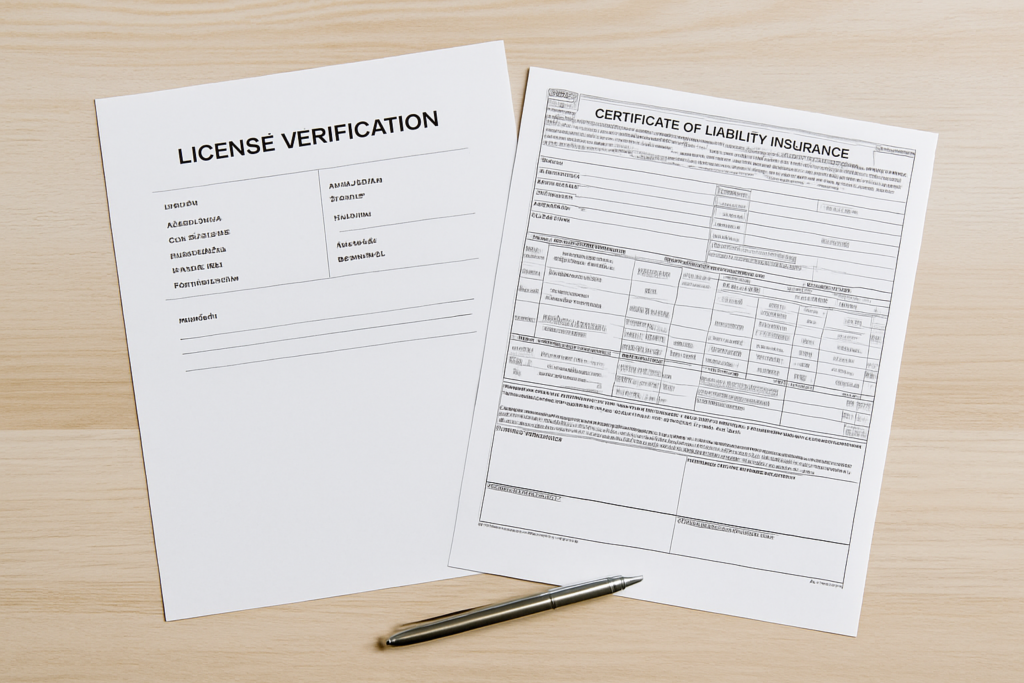
- Check Wisconsin Department of Safety and Professional Services Database – Visit the DSPS online portal and search the contractor registry. Search by company name, owner name, or license number. Verify the license is active and has no disciplinary actions. Print the verification page for your records.
- Request Proof of General Liability Insurance – Ask the landscaping company for a Certificate of Insurance (COI) directly from their insurance provider. Verify coverage limits of at least $1 million. The document should list your address as an “additional insured” if requested. Contact the insurance company directly to confirm the policy is active.
- Confirm Workers’ Compensation Coverage – In Wisconsin, contractors with employees must carry workers’ compensation insurance through the Wisconsin Department of Workforce Development. Request proof of coverage and verify it’s current. This protects you if a worker is injured on your property.
- Verify Bonding Status – A performance bond guarantees the landscaping company completes contracted work. Ask for proof of bonding through a bonding company. This is especially important for large projects exceeding $10,000. Verify the bond amount matches your project scope.
- Search Online Reviews and Better Business Bureau – Visit the Better Business Bureau (BBB.org) and check the landscaping company’s rating and complaint history. Search Google, Yelp, and Angie’s List for customer reviews. Contact the Wisconsin Landscape and Nursery Association (WLNA) for member verification.
What Every Wisconsin Homeowner Should Know About Landscaping Company Insurance
Insurance protects you from liability if property damage or injury occurs during landscaping work. Understanding the types of coverage helps you verify adequate protection. A reputable landscaping company carries multiple insurance policies tailored to their services.
General liability insurance covers bodily injury and property damage claims. If a worker damages your deck during mulching services or injures themselves, this policy covers legal and medical costs. According to the Insurance Information Institute, 86% of landscaping contractors carry general liability coverage as standard practice. Request coverage limits of $1 million per occurrence and $2 million aggregate.
Workers’ compensation insurance is mandatory in Wisconsin for landscaping companies with employees. This covers medical expenses and lost wages if a worker is injured. It also protects you from lawsuits by employees. Ask to see the latest declarations page from their workers’ compensation policy.
Property damage coverage specifically protects against damage to customer property caused by the landscaping company’s equipment or negligence. This is separate from general liability and essential for projects involving heavy machinery or tree removal.
Commercial auto insurance covers vehicles used for landscaping operations. If the company’s truck damages your property or another vehicle, this policy applies. Verify this coverage if the company uses trucks or trailers on your property.
Red Flags When Evaluating a Landscaping Company
Certain warning signs indicate a landscaping company lacks proper credentials or insurance. Protect yourself by recognizing these red flags before signing contracts.
- Refuses to provide proof of insurance or licensing without explanation
- Offers significantly lower prices than competitors (often indicates uninsured workers or cut corners)
- Cannot provide references or has negative BBB complaints unresolved
- Requests full payment upfront before work begins
- Operates as cash-only business with no formal business registration
- Cannot explain the difference between general liability and workers’ compensation
- Has no written contract or terms of service
- Displays unprofessional communication or lack of business documentation
What to Include in Your Landscaping Company Contract
A comprehensive contract protects both you and the landscaping company. Include specific language requiring proof of insurance and licensing. This becomes your primary defense in disputes or accidents.
Your contract must include the landscaping company’s full legal business name, address, and license number. Specify the scope of work in detail with timelines and completion dates. Include a clause requiring the landscaping company to maintain current insurance throughout the project. Add language stating the company is responsible for any damage caused by negligence.
Request that the landscaping company provide a liability waiver releasing you from responsibility for injuries to their workers. This protects you from lawsuits filed by employees. Include terms for payment—typically 50% deposit and 50% upon completion for smaller projects. For larger projects, request 25% upfront, 50% mid-project, and 25% upon completion.
Specify that the landscaping company is responsible for cleanup and removal of debris. Include weather contingency clauses allowing delays for severe weather. Add a warranty period for planting work, typically 30–90 days. Document any changes to the scope of work in writing with both parties’ signatures.
Why Hiring an Insured and Licensed Landscaping Company Matters
Uninsured landscaping companies create significant financial and legal risk for homeowners. If an uninsured worker is injured on your property, you may face workers’ compensation claims despite hiring an independent contractor. Wisconsin courts often hold property owners liable regardless of contractor status.
An insured landscaping company assumes responsibility for injuries and property damage. Their insurance company handles claims, investigations, and legal defense. This protects your home insurance and prevents rate increases. Licensed landscaping companies demonstrate commitment to industry standards and ongoing education.
Insurance and licensing requirements vary by Wisconsin municipality. Some require permits for excavation, tree removal, or hardscape installation. A professional landscaping company stays current with local regulations and obtains necessary permits. They understand seasonal restrictions on pesticide application and stormwater management requirements.
Hiring a licensed and insured landscaping company also ensures compliance with Wisconsin’s Qualified Applicator requirements for pesticide use. Lawn care and landscape maintenance involving chemical application requires state certification. Verify the landscaping company holds current pesticide applicator licenses if they offer weed control or fertilizer services.
How to Request and Verify Insurance Documentation
Requesting insurance documentation is straightforward and essential. Contact the landscaping company by email or phone with a specific request. Most professional companies provide documentation within 24 hours.
Request a Certificate of Insurance (COI) naming you as an “additional insured.” This document lists the policy holder, coverage limits, policy numbers, and expiration dates. The COI should be on the insurance company’s letterhead with agent contact information. Call the insurance company’s phone number listed on the COI to verify authenticity—never use contact numbers provided by the landscaping company.
Ask for the declarations page from the workers’ compensation policy if the company has employees. This page shows the business name, coverage dates, and employee classifications. Request proof of any subcontractors’ insurance if the landscaping company uses outside help for specific tasks.
Document all insurance verifications in writing. Create a file with copies of license verification, insurance documents, and contract signed by both parties. This protects you in case of disputes or accidents requiring documentation of due diligence.
Hiring a professional landscaping company through thorough verification of licensing and insurance protects your Wisconsin home and wallet. Start with choosing the right lawn service to understand the full hiring process. Review landscaping service pricing to budget appropriately for licensed, insured contractors. For specific project questions, explore comprehensive lawn service options to understand what your landscaping company should offer. Take time verifying credentials before signing any contract—it’s the best investment in protecting your property.
Frequently Asked Questions
Does Wisconsin require landscaping companies to be licensed?
Wisconsin does not mandate statewide licensing for general landscaping and lawn maintenance services. However, specific services may require licensing or certification, including pesticide application (requires state-certified applicator), tree removal in some municipalities, and hardscape installation with excavation permits. Individual cities and counties may also impose local contractor licensing requirements. Check your municipality’s building department for specific rules.
What insurance coverage should a landscaping company have?
A professional landscaping company should carry general liability insurance (minimum $1 million), workers’ compensation insurance (mandatory if they have employees in Wisconsin), commercial auto insurance for vehicles used in operations, and property damage coverage. Request certificates of insurance before hiring. For large projects, ask about bonding and pollution liability if chemical applications are involved.
What happens if a landscaping company’s worker is injured on my property?
If the landscaping company carries workers’ compensation insurance, their policy covers the injury regardless of your property location. You are protected from direct liability because workers’ compensation is the exclusive remedy for employee injuries. However, if the landscaping company is uninsured, you may face claims through your homeowner’s insurance or personal liability. This is why verifying workers’ compensation coverage is essential before work begins.
Frequently Asked Questions
Does Wisconsin require landscaping companies to be licensed?
Wisconsin does not mandate statewide licensing for general landscaping and lawn maintenance services. However, specific services may require licensing or certification, including pesticide application (requires state-certified applicator), tree removal in some municipalities, and hardscape installation with excavation permits. Individual cities and counties may also impose local contractor licensing requirements. Check your municipality’s building department for specific rules.
What insurance coverage should a landscaping company have?
A professional landscaping company should carry general liability insurance (minimum $1 million), workers’ compensation insurance (mandatory if they have employees in Wisconsin), commercial auto insurance for vehicles used in operations, and property damage coverage. Request certificates of insurance before hiring. For large projects, ask about bonding and pollution liability if chemical applications are involved.
What happens if a landscaping company’s worker is injured on my property?
If the landscaping company carries workers’ compensation insurance, their policy covers the injury regardless of your property location. You are protected from direct liability because workers’ compensation is the exclusive remedy for employee injuries. However, if the landscaping company is uninsured, you may face claims through your homeowner’s insurance or personal liability. This is why verifying workers’ compensation coverage is essential before work begins.
Related reading: Lawn Landscaping Services: Year-Round Seasonal Care Schedule for Wisconsin