Professional lawn landscaping services require a strategic seasonal approach tailored to Wisconsin’s demanding climate. A year-round care schedule ensures your property thrives through spring growth, summer heat, fall preparation, and winter dormancy.
Wisconsin’s Zone 5a climate demands distinct maintenance phases that differ significantly from southern regions. Implementing a proven seasonal schedule protects your investment and maximizes curb appeal across all four seasons.
Spring Lawn Landscaping Services: Foundation for Growth
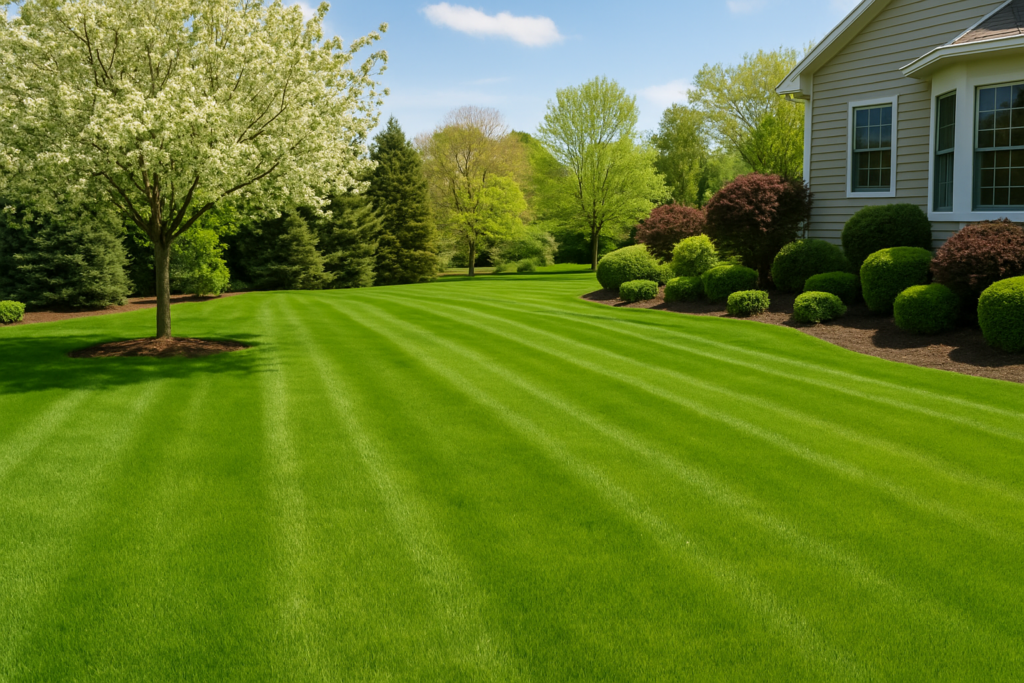
Spring is when most homeowners engage lawn landscaping services professionals. Soil temperatures reaching 55°F consistently signal the start of active growth, typically between late April and early May in Wisconsin. This timing coincides with when dormant grass begins breaking dormancy and weeds emerge aggressively.
Essential spring tasks include:
- Early cleanup: Remove winter debris, dead leaves, and thatch buildup using professional-grade rakes or power brooms. This prevents mold and disease while improving soil air circulation.
- Soil testing: Professional lawn landscaping services begin with soil analysis using pH meters and nutrient testing kits to identify deficiencies before fertilizing.
- Pre-emergent application: Apply pre-emergent herbicides between March 15–April 15 to prevent crabgrass germination before it starts.
- Overseeding: Fill thin patches and bare spots with quality seed blends suited to Wisconsin’s cool-season grasses like perennial ryegrass and fescue.
- First fertilizer treatment: Apply balanced nitrogen-phosphorus-potassium (NPK) formulas—typically 10-10-10 or 15-5-10—to stimulate spring growth.
Spring pruning and bed preparation also fall under comprehensive lawn landscaping services. Shrubs and trees benefit from dead wood removal after winter damage assessment. Professional contractors evaluate branch structure and remove crossing or diseased limbs before new foliage emerges.
Summer Lawn Landscaping Services: Maintenance and Protection
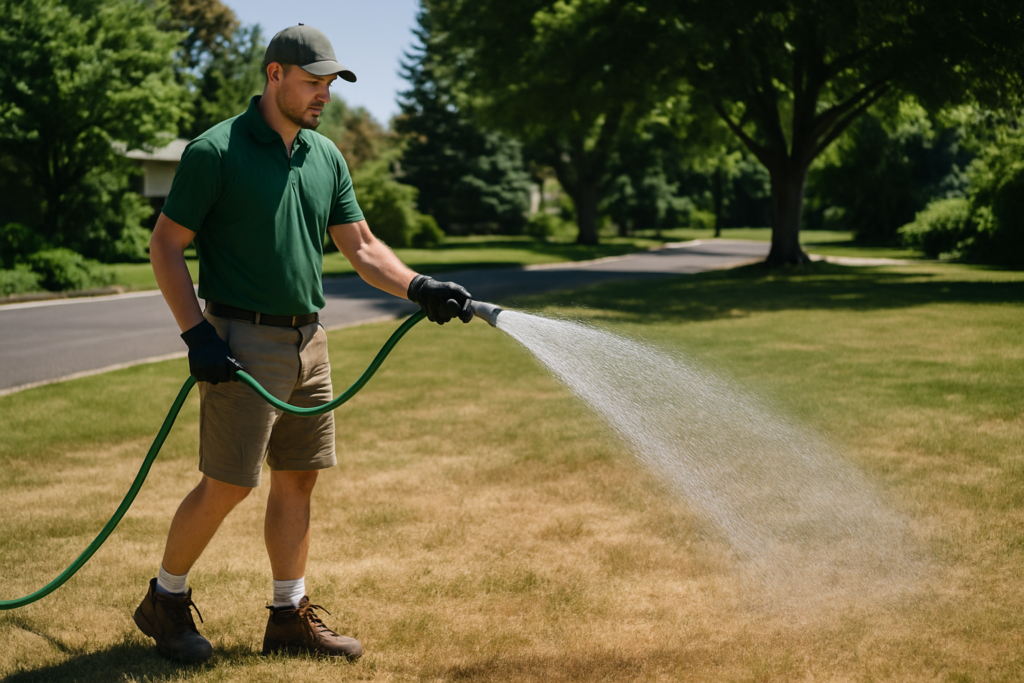
Summer presents the harshest conditions for Wisconsin lawns, with heat stress and drought creating vulnerability. Professional lawn landscaping services shift focus from growth stimulation to stress management and damage prevention. July and August typically bring 4–6 week dry periods demanding strategic irrigation and adjusted mowing practices.
Key summer care strategies include:
- Deep watering 1–2 times weekly (1.5 inches per session) rather than shallow daily sprinkling to encourage deep root development
- Raising mower blade height to 3–4 inches to shade soil and reduce evaporation stress
- Avoiding fertilization during heat peaks—most professionals pause feeding until late August
- Monitoring for dollar spot, rust, and other fungal diseases common in humid Wisconsin summers
- Applying targeted fungicide treatments when disease pressure emerges
- Weed management through spot treatments rather than broad applications
- Edge and bed maintenance to maintain clean landscape lines
Seasonal lawn care professionals use soil moisture meters—devices measuring water availability at root depth—to determine precise watering schedules rather than guessing. This data-driven approach reduces water waste by 20–30% while improving turf health.
Summer also marks prime time for patio and hardscape maintenance. Professional lawn landscaping services include power washing pavers and patios, sealing grout lines, and addressing settling or weed encroachment in outdoor living spaces.
Fall Lawn Landscaping Services: Preparation and Strengthening
Fall (September–November) represents the most critical season for lawn landscaping services in Wisconsin. Cool nights and moderate moisture create ideal conditions for root development and stress recovery. A recent study found that fall-applied fertilizer strengthens winter hardiness by 35% compared to spring applications alone.
Critical fall tasks include:
- Aeration and overseeding: Mechanical aeration removes soil compaction, and immediate overseeding fills holes with fresh seed that germinates in cool fall conditions.
- High-potassium fertilization: Late-season feeding emphasizes potassium (K) to harden plants against winter stress—using formulas like 10-10-20 or 15-10-30.
- Leaf removal: Professional contractors use commercial-grade leaf removal equipment to clear debris, preventing mold and disease pressure during dormancy.
- Gutter cleaning: This prevents water damage and ensures proper drainage around foundation and landscape beds.
- Mulch refreshing: Adding 2–3 inches of quality mulch to beds protects perennials and insulates soil before freezing temperatures arrive.
- Shrub and tree pruning: Fall allows contractors to assess winter damage risk and remove deadwood before storms damage weakened limbs.
Fall lawn landscaping services also include drainage assessment. After summer dry periods, professionals evaluate grading and standing water issues before spring snowmelt compounds problems. Installing French drains or swales during fall allows installation when soil is workable but minimizes interference with summer usage.
Winter Lawn Landscaping Services: Planning and Limited Maintenance
Wisconsin winters demand a different approach to lawn landscaping services. From December through March, active growth stops, but strategic planning and selective maintenance continue. Professional contractors use winter months for landscape design consultations, hardscape repairs, and equipment maintenance.
Winter lawn landscaping services include:
- Snow and ice management on walkways, patios, and driveways using salt-safe de-icers
- Monitoring salt damage to plants and soil—excessive sodium from road salt damages turf and evergreens
- Protecting ornamental plants with burlap wrapping to prevent ice and snow damage
- Avoiding foot traffic on frozen grass to prevent crown damage that encourages spring disease
- Scheduling landscape design consultations for spring installation projects
- Planning mulch and soil amendments for spring application
- Servicing irrigation systems and storing hoses before freezing damage occurs
Many homeowners overlook dormant season pruning during winter months. Professional lawn landscaping services often schedule tree and shrub pruning in late February when sap flow is lowest and disease transmission risk decreases. Bare branches also reveal structural issues invisible under summer foliage.
Creating Your Custom Seasonal Schedule for Lawn Landscaping Services
The most effective lawn landscaping services programs customize schedules based on property-specific conditions rather than generic timelines. Factors including sun exposure, soil type, drainage patterns, existing plant health, and lawn species all influence optimal timing.
Professional contractors assess these variables through initial property consultations. They document existing conditions, identify problem areas, and develop comprehensive seasonal calendars specific to your Wisconsin property. This customization ensures resources focus on highest-impact activities rather than unnecessary standard treatments.
Most comprehensive lawn landscaping services include quarterly maintenance visits coordinating with seasonal transitions. Spring awakening (April–May), summer stress management (June–August), fall strengthening (September–November), and winter preparation (December–March) create natural service intervals that align with plant biology and Wisconsin weather patterns.
Documentation matters significantly. Professional contractors maintain service logs noting treatments applied, timing, product brands (such as Turfco or John Deere equipment), and results observed. This historical data informs future year planning and demonstrates accountability to homeowners.
For homeowners seeking professional expertise, comprehensive lawn maintenance guides provide detailed resources on year-round care. Understanding seasonal principles empowers you to evaluate contractor proposals and ensure quality lawn landscaping services delivery throughout Wisconsin’s challenging climate.
Building a partnership with experienced professionals ensures your landscape investment thrives across all seasons. Quality lawn landscaping services require consistent application of proven techniques timed to Wisconsin’s specific environmental conditions, delivering results that compound season after season.
Frequently Asked Questions
When should I start spring lawn landscaping services in Wisconsin?
Begin spring lawn landscaping services when soil temperatures consistently reach 55°F, typically late April to early May in Wisconsin. This timing aligns with when grass breaks dormancy and coincides with pre-emergent crabgrass prevention windows. Early action prevents weed pressure from overwhelming young growth.
How often should I schedule professional lawn landscaping services during summer?
Most homeowners benefit from bi-weekly lawn landscaping services during summer growth season (June–August), including mowing, edging, and monitoring. If drought stress appears, add deep watering sessions—typically 1–2 times weekly—rather than daily shallow sprinkling. This frequency maintains appearance while promoting stress resilience during Wisconsin heat peaks.
Why is fall the most important season for lawn landscaping services?
Fall offers ideal conditions for root development and stress recovery in Wisconsin lawns. Cool temperatures and moderate moisture enable aeration, overseeding, and potassium-based fertilization that hardened plants against winter damage. Professional lawn landscaping services emphasize fall because improvements made now determine spring appearance and summer stress tolerance—making it the season with highest impact-to-effort ratio.
Learn professional standards when selecting contractors to handle your seasonal lawn landscaping services, ensuring proper licensing and insurance protect your investment.
Frequently Asked Questions
When should I start spring lawn landscaping services in Wisconsin?
Begin spring lawn landscaping services when soil temperatures consistently reach 55°F, typically late April to early May in Wisconsin. This timing aligns with when grass breaks dormancy and coincides with pre-emergent crabgrass prevention windows. Early action prevents weed pressure from overwhelming young growth.
How often should I schedule professional lawn landscaping services during summer?
Most homeowners benefit from bi-weekly lawn landscaping services during summer growth season (June–August), including mowing, edging, and monitoring. If drought stress appears, add deep watering sessions—typically 1–2 times weekly—rather than daily shallow sprinkling. This frequency maintains appearance while promoting stress resilience during Wisconsin heat peaks.
Why is fall the most important season for lawn landscaping services?
Fall offers ideal conditions for root development and stress recovery in Wisconsin lawns. Cool temperatures and moderate moisture enable aeration, overseeding, and potassium-based fertilization that harden plants against winter damage. Professional lawn landscaping services emphasize fall because improvements made now determine spring appearance and summer stress tolerance—making it the season with highest impact-to-effort ratio.